Chamberlain Shuts the (Garage) Door on API Access⇢

Jennifer Pattison Tuohy, writing at The Verge:

The Chamberlain Group — owners of the MyQ smart garage door controller tech — has announced it’s shut off all “unauthorized access” to its APIs. The move breaks the smart home integrations of thousands of users who relied on platforms such as Homebridge and Home Assistant to do things like shut the garage door when they lock their front door or flash a light if they leave their door open for 10 minutes, or whatever other control or automation they wanted to do with the device they bought and paid for.

The move comes a year after Chamberlain discontinued its official Apple HomeKit integration and a few months after it finally killed support for Google Assistant. It’s sadly another example of how the company continues to be hostile to the interoperable smart home.

Continue reading ⇢

The Great iMac Realignment

It’s the stuff of lore now, but Steve Jobs’ “Grid of Four” took a messy Mac lineup and made it simple enough for anyone to understand:

Grid of Four

Trying to cram the Apple of today into something like the Grid of Four doesn’t make much sense. In fact, Apple only used it for a handful of years, but even when the Grid of Four was the product strategy at Apple, the iMac began to creep toward the professional column.

Continue reading ⇢

Apple’s ‘Scary Fast’ Event Brings the M3 to Life

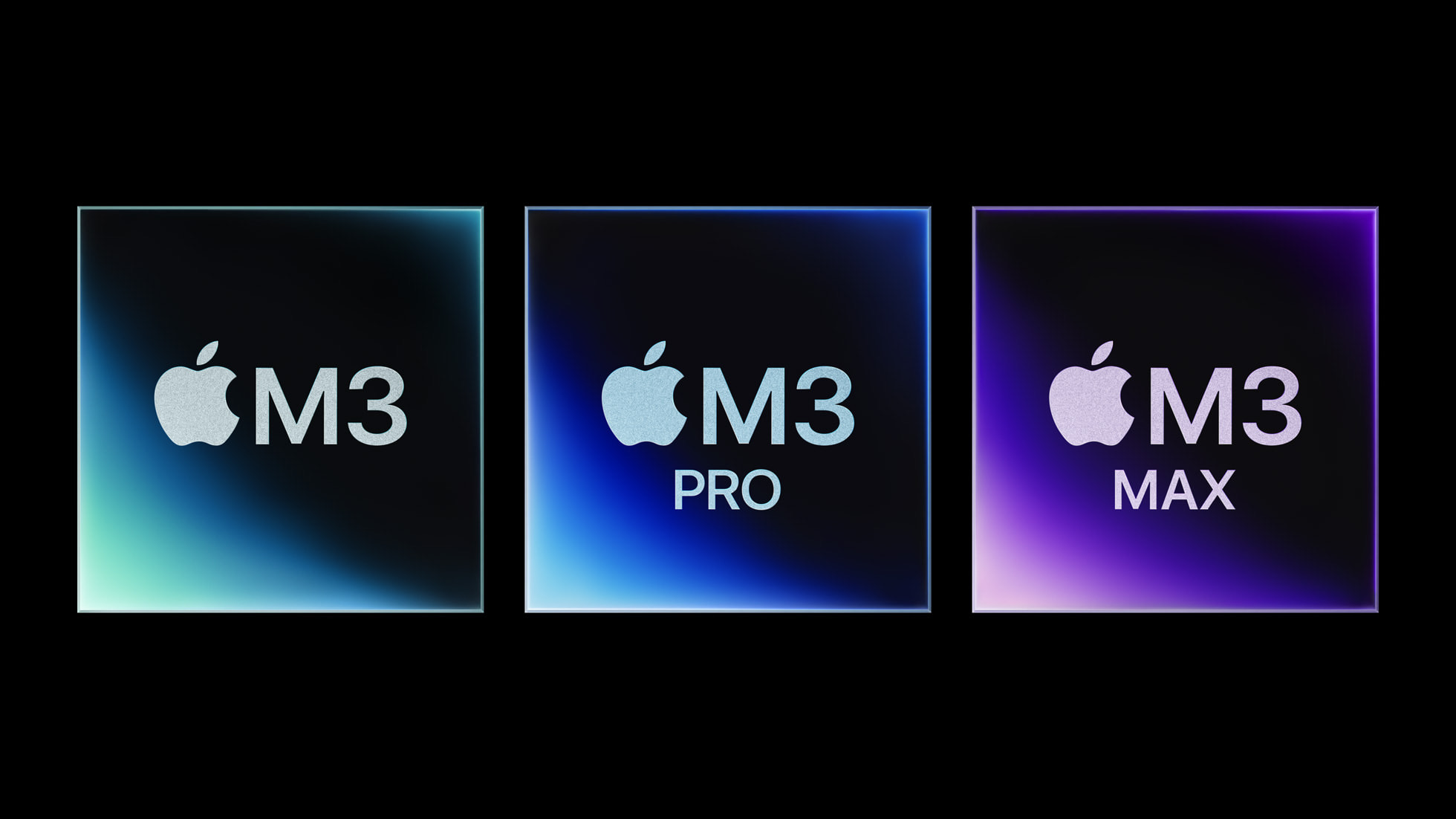
Rumors about the M3 have been all over the map, but in this evening’s “Scary Fast” stream,1 Apple unveiled not one, but three new Apple silicon chips: the M3, the M3 Pro and the M3 Max, all built on a 3 nanometer process.

M3 series

M3

This marks the first time since transitioning away from Intel that Apple has unveiled both the entry-level and upper-end options of a new generation of chips at the same time. Here’s a recap of how things have been rolled out so far:

Continue reading ⇢

Apple Increasing Services Prices in U.S. and Beyond⇢

Apple is rolling out increased pricing for several services today, as reported by Joe Rossignol:

In the U.S., these are the first-ever price increases for Apple Arcade and Apple News+ since the services launched in November 2019, while Apple TV+ had its first price increase from $4.99 per month to $6.99 per month in October 2022.

Here are the increases customers in the United States will see:

  • Apple TV+: $6.99/month → $9.99/month
  • Apple Arcade: $4.99/month → $6.99/month
  • Apple News+: $9.99/month → $12.99/month

As a result, the costs of Apple One bundles are also increasing:

Continue reading ⇢

Apple Announces Apple Pencil (USB-C), joining the Apple Pencil (1st generation) and Apple Pencil (2nd generation)⇢

Jokes about the name — and this chart — aside, I think this new $79 Pencil is a nice addition to Apple’s lineup.

Apple Pencil (USB-C)Dan Moren has the details:

This pencil is clearly designed for use with the tenth-generation iPad: while it attaches magnetically to the long edge of the iPad for storage, it still charges via a physical port. Unlike the old Lightning model, which had a removable (and easily lost) cap hiding its charging and pairing connector, the new Apple Pencil features an innovative sliding design that reveals a USB-C port into which you can plug a cable (which, naturally, is not included). Its design is otherwise very similar to the second-generation Pencil.

At $79, this Pencil is cheaper than both the first-generation model at $99 and the second-generation model at $129. But that’s because it doesn’t have all the features of either of them: it lacks the pressure sensitivity of either of the previous models, as well as the double-tap controls, wireless pairing and charging, and free engraving of the second-generation. However, the new Pencil does support the “hover” feature on M2 iPad Pro models.

Continue reading ⇢

The Six Colors iPhone 15 Pro Review⇢

Jason Snell, writing on Six Colors:

iPhone designs change at a glacial pace. It’s rare that a new iPhone looks completely unlike the previous model. They’ve all looked more or less the same since the iPhone X ditched the home button back in 2017. Careful observation indicates that the iPhone 15 Pro design is different from the iPhone 14 Pro, which is different from the iPhone 13 Pro—but the external differences are extremely subtle.

This is okay. The iPhone is clearly on a multi-decade trajectory toward becoming a thin, featureless slab of glass. In the meantime, Apple keeps varying materials and colors and upgrading the processors and cameras in order to ensure that people buying a new iPhone will find it at least somewhat different from the ones in their pockets.

It may not be logical, but it’s absolutely true that after spending around $1000 on a new phone, I don’t want it to be exactly like the one it’s replacing. What’s the fun in that?

Continue reading ⇢