Like last year, Apple will have a small group of folks in person at Apple Park. See you there!

Like last year, Apple will have a small group of folks in person at Apple Park. See you there!
We all know that Apple has nice built-in password management in macOS and iOS. But very, very few people know that Apple’s passwords can also:
- Autofill any 2FA verification codes, which you easily can add by scanning QR codes!
- Keep a “Notes” field where you can add extra data, like 2FA backup codes, for each password!
- Import passwords exported from another app, like 1Password! (And it all syncs across your devices, for free?!)
Very few people know these things because Apple tucks all of their important password features away in weird little Settings panels, instead of in a Proper Real App. I think this is a mistake.
I put this on Mastodon yesterday, but wanted to share it here, too:
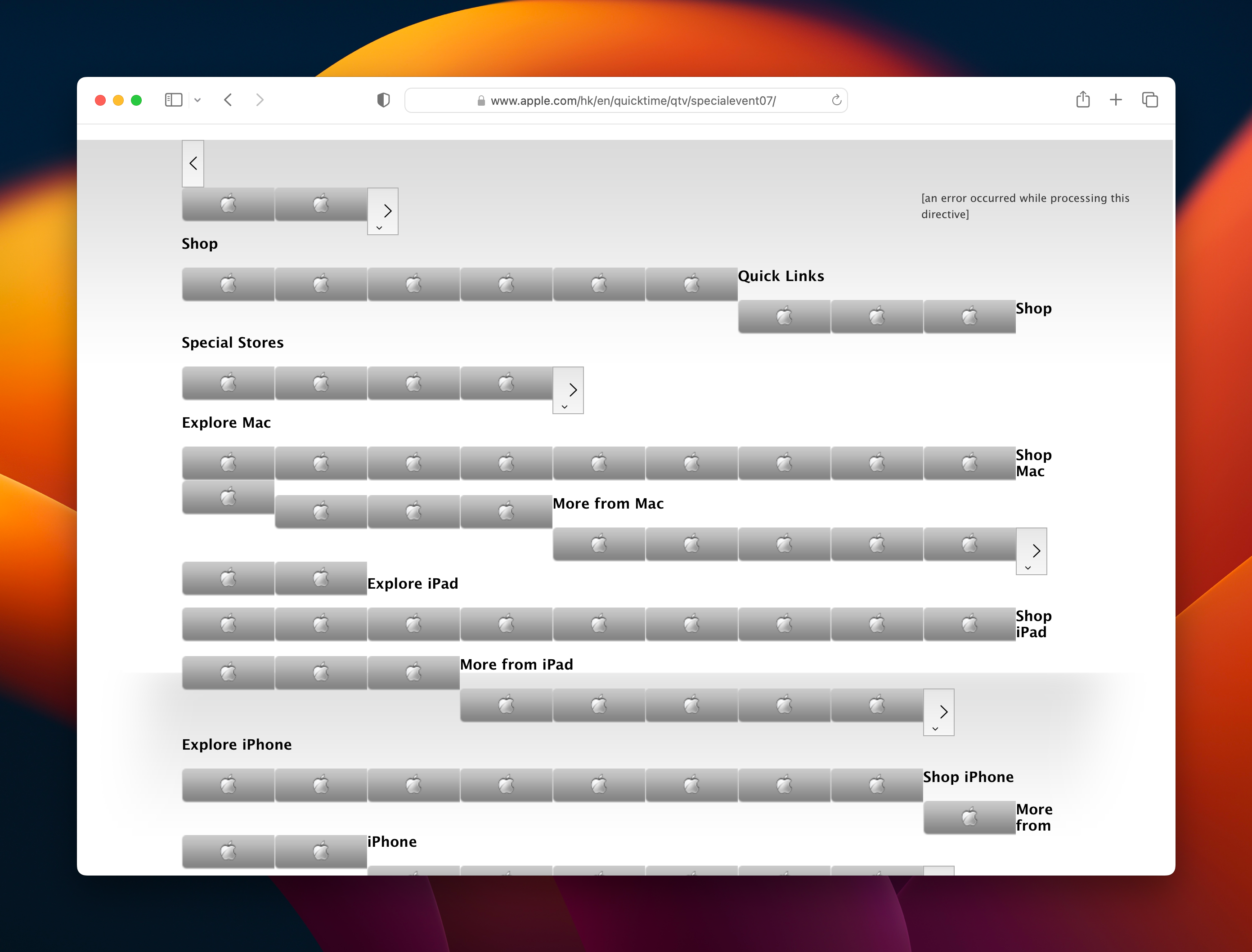
I came across this page when working on the next Apple History calendar, and it really made me chuckle. I’ve got an image of the whole thing saved here for all time.
UPDATE: This has been fixed as of iOS 17!
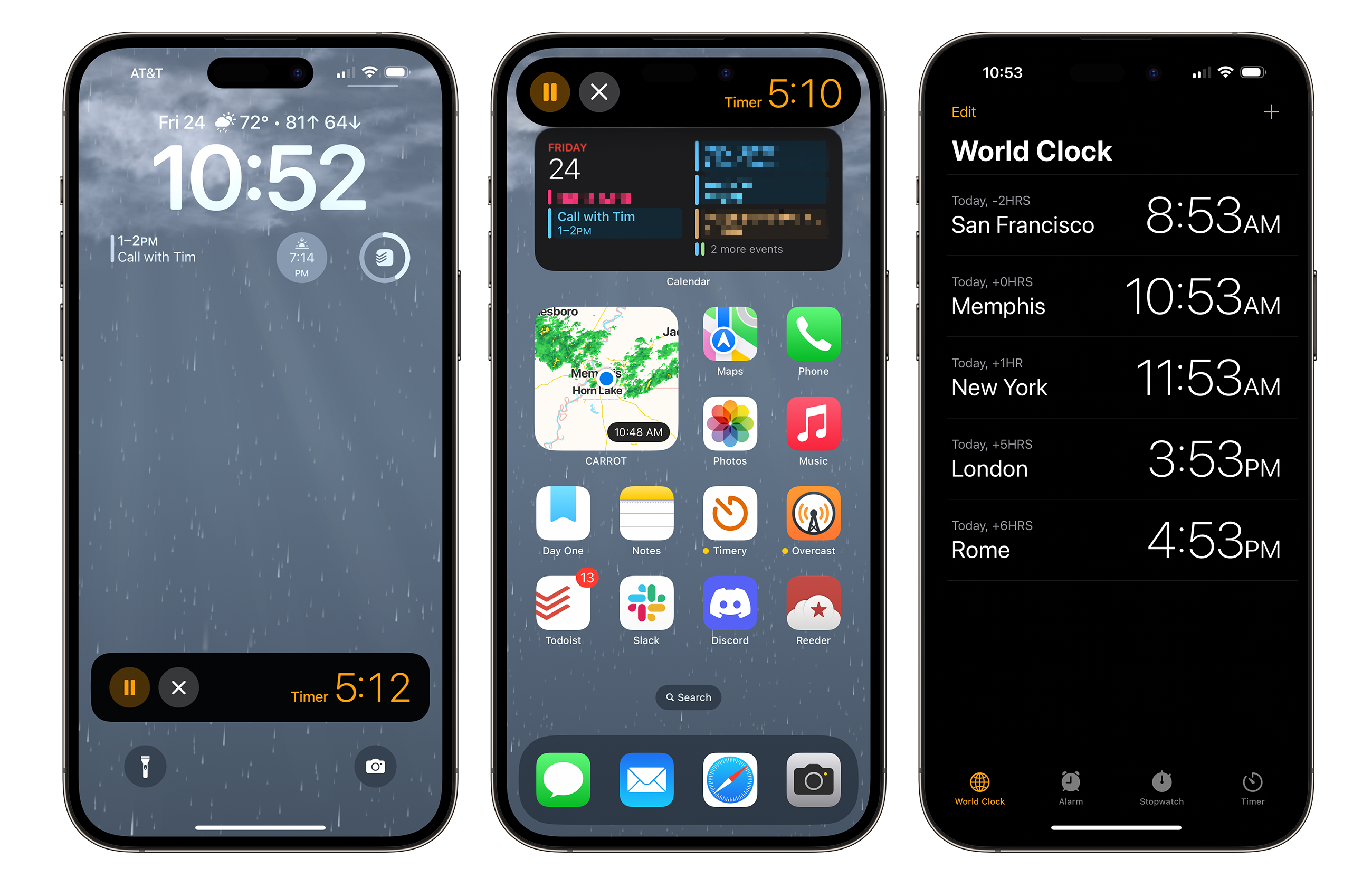
Apple’s Live Activity feature has begun to take off, with more and more apps doing interesting things with the new user interface. Sadly, one of Apple’s own uses for it doesn’t work the way it should.1
In this image, you can see the Live Activity on the lock screen, expanded from the Dynamic Island and a screenshot of Clock.app itself:
Everyone’s favorite tall YouTuber has a new video out, looking at the whirlwind of Reality Pro rumors. I am personally finding it hard to get excited about this, but I have to admit, his passion for the subject has helped:
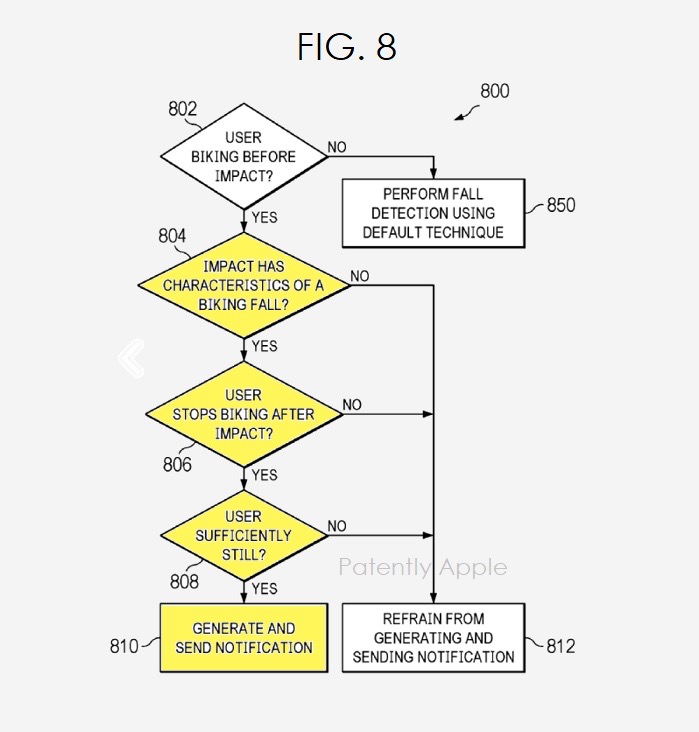
With the regular fine print that “big companies patent every single thing they can,” this report on Patently Apple caught my eye. I’ve had more than a couple bike crashes over the years, including one that shattered an Apple Watch.
I just love the graphic included in the post that shows the decision tree involved:
Over the past couple years, Apple’s been rolling out its “Detailed City Experience” in Maps to cities across the world and finally, at long last, those improved maps and better landmarks have come to my hometown of Boston, as first noted by Frank McShan on Twitter.
These are really nice looking. The closest thing I’ve seen here in Memphis is the Bass Pro location inside the Pyramid, and it really doesn’t come close to these new Maps illustrations:
I did not have “Apple Music Classical is announced as an App Store pre-order” on my bingo card for 2023. Not to mention that the app won’t launch on the iPad on day one.
Filipe Espósito, writing last week at 9to5Mac:
9to5Mac last month revealed a first look at the design of the entire iPhone 15 lineup based on CAD files used to build the phones and also compatible accessories. But one thing that remained unclear was the layout of the volume buttons, which reportedly will be capacitive rather than physical. 9to5Mac has heard from a source that iPhone 15 Pro will have new unified volume buttons, plus a “pressing type” mute button.
According to our source, who’s familiar with making certified accessories for Apple products, the iPhone 15 Pro models will ditch the separate volume up and volume down buttons for a new single button that works both ways depending on where the user presses it.
When Steve Jobs made it back to Apple, the company had dozens of products that would not survive the company’s move to a much simpler product matrix. In a sea of forgettable Macs and accessories, the biggest loss was the Newton.

Here is the announcement itself, in its entirety:
Apple Computer, Inc. today announced it will discontinue further development of the Newton operating system and Newton OS-based products, including the MessagePad 2100 and eMate 300.
“This decision is consistent with our strategy to focus all of our software development resources on extending the Macintosh operating system,” said Steve Jobs, Apple’s interim CEO. “To realize our ambitious plans we must focus all of our efforts in one direction.”
Apple is committed to affordable mobile computing, pioneered by the eMate, and will be serving this market with Mac OS-based products beginning in 1999.
Apple will continue to market and sell its current inventory of MessagePad 2100 and eMate 300 computers, as well as to provide support for their installed base of users. The Company is committed to working with its customers and developers to ensure a smooth transition to Mac OS-based products.
Rumors about that new 15-inch MacBook Air and the future Mac Pro keep heating up, as Joe Rossignol reports:
Apple this week filed a new listing in the Bluetooth Launch Studio database, a move that sometimes foreshadows the launch of new products. The filing does not mention any specific products, but it lists the latest Bluetooth 5.3 standard and references a prior macOS-related listing, suggesting the filing could be related to upcoming Macs.
Apple is rumored to be planning new versions of the MacBook Air and the Mac Pro for release in the first half of 2023. The new MacBook Air is expected to feature a larger 15-inch display and the M2 chip, while the new Mac Pro is expected to have the same design as the 2019 model with a new M2 Ultra chip. Both new Macs could be announced as early as March or April, potentially alongside the release of macOS 13.3. However, there remains a possibility that the new Macs will not be announced until WWDC in June or later.
Jason Snell, writing at Macworld:
So what makes a Mac Pro a Mac Pro? If it’s a tower enclosure, Apple’s got a relatively fresh one from 2019 that it can just roll out again. (Gurman says that’s now the plan, which is also a little disconcerting when you consider that the original reports suggested a new, half-height enclosure and that quad-M2 chip.) But what’s inside the Mac Pro matters, and if it’s just an M2 Ultra chip, it’s hard not to consider the new Mac Pro just a Mac Studio that moved out of its apartment and into a mini-mansion.
Does it help if there’s expandable internal storage? Sure, I suppose–it’s certainly a lot neater than attaching drives via external ports. Does it help if Apple offers additional M2 GPU cores via some sort of proprietary add-on card system? Maybe, if it’s done the extra engineering work. What about RAM expansion? Sure, but again, such a choice would undercut the work Apple has done to create a pool of fast, shared memory right next to the CPUs and GPUs.
And all that custom work, all those distortions to what makes Apple silicon so successful, would be done for a product that’s a niche of a niche–and it’s work that Apple’s chip design team could have spent on a next-generation chip for the iPhone, iPad, and Mac.

