
John Voorhees has discovered something amazing and terrible.
512 Pixels
Kbase Article of the Week: LaserWriter Fax: Does Not Support Two Faxes on One Line⇢
Years ago, some poor and forgotten soul ran into this problem with a LaserWriter:
I am using a LaserWriter 16/600 PS with the fax option, and another standard fax machine connected to the same phone line. Even though the printer fax option is set to answer after eight (8) rings and the fax machine is set for two (2) rings the fax printer connects as soon as the standard fax machine answers the incoming call. It sounds like both devices try to communicate and then the line is dropped. I want to use the fax in the printer for out-going faxes only, and then use the second fax machine for incoming faxes and faxes that need to be sent manually.
Apple Support, replying to the question:
This configuration is non-standard. Only one fax device should be connected at a time to prevent a carrier signal from activating the second device. Even though the printer has been set to answer after eight (8) rings, it probably senses an ‘off hook’ condition when the standard fax machine answers and then detects the carrier tone causing both fax devices to respond. When neither device can connect properly they both hang up.
We are not aware of a PostScript solution for preventing this problem, however there is a third-party device which may work. The device is not intended for this exact situation, but it should work fine. A company called Command Communications Incorporated produces a line of products called Comshare which allow a single phone line to automatically switch between fax, modem, answering devices, and voice modes. By connecting the standard fax to the fax port and the printer fax to the modem or voice port the problem should be resolved. The Comshare device intercepts incoming calls when the phone rings and listens for signals that are characteristic of a fax, modem, or voice call. It then quickly connects the appropriate device.
To locate a vendor’s address and phone numbers, use the vendor name as the search string.
Mac Power Users #596: 30 iPhone Apps Under $10⇢
This week on Mac Power Users, David and I check out a bunch of iPhone apps.
Sealed Super Mario 64 Goes for $1.56 Million⇢
An unopened copy of Nintendo’s Super Mario 64 has sold at auction for $1.56 million.
Heritage Auctions in Dallas said that the 1996 game sold Sunday, breaking its previous record price for the sale of a single video game.
A spokesman did not immediately respond to an inquiry about who purchased the game.
Holy moly.
Coherence X4⇢
My thanks to Coherence X4 for sponsoring 512 Pixels this week. It lets you turn any website into an app on your Mac. Readers get 20% off this week when you purchase Coherence X4 at http://bzgapps.com/coherence512 or when you use the promo code ‘512Pixels’ at checkout.
10 Years Later, NASA’s Post-Shuttle Vision Still Coming into Focus
Today marks a full decade since STS-135 — the final shuttle mission — lifted off. Atlantis and a crew of 4 delivered a year’s worth of supplies and many spare parts to the International Space Station, the on-orbit laboratory that the Shuttle was largely responsible for constructing.
Jason Snell was there for the launch:
Hard to believe this was 10 years ago today–and that this was my view of it. #STS135 and the end of the Shuttle era. pic.twitter.com/XmiTRicIRr
— Jason Snell (@jsnell) July 8, 2021
In the years since, NASA has seen its target for the next generation of spacecraft and missions changed several times.1 However, in recent years, the Commerical Crew program has come into its own, with SpaceX taking crew members back and forth from the ISS. (Boeing is a little behind but will hopefully come online with its Commerical Crew program next year.)
NASA itself has been building the Space Launch System for nearly as long as the Shuttle has been retired. Its purpose will be to send astronauts and payload to the moon. It will be a monster of a rocket, matched only by its massive budget overruns and revamped schedules.
 A rendering of the SLS. On Liftoff, Jason and I have been critical of the SLS program. There are many who feel that is a vehicle without a clear purpose, as opposed to something like the Saturn V, which was custom-built for the Apollo missions of the 1960s and 70s.
There is also criticism that says the rocket is just a jobs program. It is true that SLS vendors can be found in nearly every state of the nation, even if the main work is taking place within NASA’s own space centers, by a joint team of NASA and Boeing engineers, as well as folks from other various companies.
This type of public/private partnership to build spacecraft is not new. Rockwell was behind the space shuttle itself, while Thiokol built its solid rocket boosters (which have been upgraded for SLS duty). Grumman built the Apollo Lunar Module, while North American Aviation was in charge of the Apollo Command and Service Module.
What is new is direct competition. SpaceX’s Starship will be capable of reaching the moon, landing them on the surface, then bringing them home. As mentioned before, SpaceX and Boeing will be taking crew members to the International Space Station and back. Blue Origin and ULA are working together on a new rocket, with the former angling for a spot in the Human Landing System Program.
Beyond these large companies are dozens working everything from future space stations and cubesats to launch vehicles and rovers… and that’s not to mention that China, Russia and others are already making space history of their own.
Competition is good. It can let NASA focus on what it is good at, while letting its partners take over other tasks, such as keeping the ISS staffed and supplied, via the Commercial Crew program.
The Shuttle program wasn’t perfect; its legacy may be the ISS, but it is marred with the death of the crews aboard Challenger and Columbia. Combined with the fact that the vehicle was less capable and shockingly more expensive than originally estimated, it’s not uncommon to have complicated feelings on the subject.
Looking at the SLS program, I can’t help but get some of those vibes. Yes, its design is far simpler and should be much safer, but the federal government — NASA included — doesn’t seem to have a clear vision of what it’s for. NASA is building it to be human-rated, so crews can take it to the moon, but Starship is on that path as well for way, way less money. I have no doubt as the 2020s tick on, we’ll see other companies working toward crewed flight beyond the ISS as well.
I can’t help but wonder what NASA could do with the SLS funding, but applied to things like Earth sciences, robotic missions, observatories and more. If the US would be willing to purchase launches from partners and let NASA focus on other things, it could radically change how much we know about our own planet and planets we’ve yet to discover. And yes, it can even put boots on the lunar surface and beyond.
The Shuttle wasn’t the ideal vehicle for the job, and I’m not sure the SLS will be, either.
-
In short, Republicans want to return to the moon, but Democrats want to go to Mars. Things seemed to have settled down with the Artemis program to return astroanuats to the moon as a staging ground for future Mars missions. ↩︎
Connected #353: 88XX BANE⇢
A ceramic Apple Watch. A calendar Kickstarter. A review update. A ceramic Apple Watch. A calendar Kickstarter. A review update. An Apple Watch. A Kickstarter. An update.
This is not three episodes of Connected. It’s one episode, and we call it 88XX BANE.
The BMW CE 04
I love how this new electric scooter looks, even if its press release is really weird.
Kbase Article of the Week: Mac OS X 10.4: iCal Calendar Alarms do not Work After Upgrading⇢
To make sure that calendar alarms in calendars created in iCal 1.5.x work in Mac OS X 10.4 Tiger, open iCal 2.0 or later (included with Mac OS X 10.4) at least once. Your calendars will be updated, and the alarm should work as expected.
Sponsor: Coherence X4⇢
Coherence X4 allows you to turn any website into a chromium-powered app on your Mac. Simply pick a site, enter a name, and pick an icon, and Coherence will turn the app into an isolated application separate from your main browser.
Unlike resource hogging Electron apps, Coherence apps are fully powered and completely customizable. You can use the vast majority of Chrome extensions, customize app assets, and even use features like whitelisting to turn websites like Gmail into an email client that will bump links to your default browser.
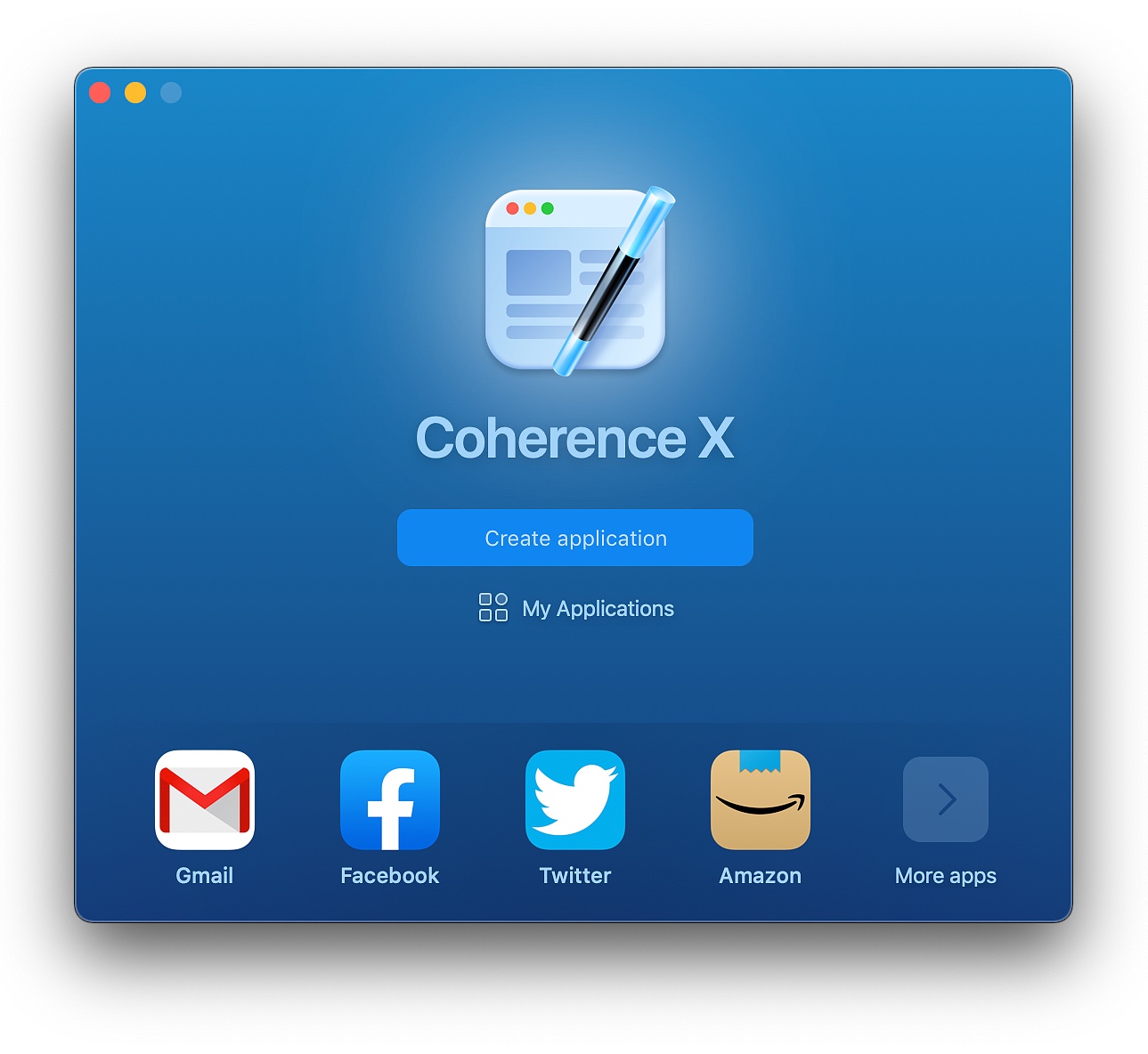
Coherence X4 includes a number of significant new features, including:
- Microsoft Edge & Opera Support: You should never be forced to give your data to someone you don’t want to. In addition to Chrome, Canary, and Brave, X4 adds support for Edge and Opera.
- Incognito apps - You can now combine the isolation benefits of Coherence with the privacy benefits of Incognito. Incognito apps always launch in Incognito, and will clear your data between sessions.
- Quick Resume - Coherence X4 is the first Chrome-based SSB tool that behaves like a Mac app should. If you ever close a window in Coherence, it will return to where you left off when you click on the dock icon, as opposed to requiring a restart.
- App Library - A new way to quickly install apps and manage created ones.
- M1 - Coherence X4 is the first Chrome-based SSB tool built for M1.
You can use Coherence to do things like:
- Create a Google Drive app that works as well as Chrome without having to use Chrome as your default browser
- Create a desktop app for Roam Research, Microsoft Teams, Zoom, or Google Meet
- Make a customizable app for Slack, Whatsapp, or any other electron-based app with the ability to add extensions or customize
- Create isolated, incognito workspaces for multiple sites like your banking applications or email and messaging.
Readers get 20% off this week when you purchase Coherence X4 at http://bzgapps.com/coherence512 or when you use the promo code ‘512Pixels’ at checkout.
Mac Power Users #595: The Poetic Mike Vardy⇢
Mike Vardy returns to the show to update David and Stephen on where he’s found balance between the iPad and the Mac. Mike also discusses how he blends analog and digital tools, and how he shares tasks and ideas with his remote team.
My thanks to the sponsors of this episode:
- 1Password: Have you ever forgotten a password? You don’t have to worry about that anymore.
- Sanebox: Stop drowning in email!
- Squarespace: Make your next move. Enter offer code MPU at checkout to get 10% off your first purchase.
- Setapp: More than 200 powerful apps for your Mac. Try it free for a week.
2001 Revisited: G4 Cube ‘Put on Ice’
In my series 2001 Revisited, I’m covering Apple’s major announcements from 20 years ago. It’s now July, which means we get to talk about what may be the most unusual press release in Apple’s modern history:
Apple today announced that it will suspend production of the Power Mac G4 Cube indefinitely. The company said there is a small chance it will reintroduce an upgraded model of the unique computer in the future, but that there are no plans to do so at this time.
“Cube owners love their Cubes, but most customers decided to buy our powerful Power Mac G4 minitowers instead,” said Philip Schiller, Apple’s vice president of Worldwide Product Marketing.
The Power Mac G4 Cube, at less than one fourth the size of most PCs, represented an entirely new class of computer delivering high performance in an eight-inch cube suspended in a stunning crystal-clear enclosure.
There’s no doubt in my mind that the Cube was Steve Jobs’ baby. When it was announced just a year earlier, he could barely contain himself.
I get it. I love my Cube. It looks incredible and It is so much fun to flip it over and pull the guts out.

At the same time, I see why it didn’t really take off. Not only was the Power Mac G4 more powerful and more expandable, but it started at $200 less than the Cube. It could also be specced way higher than the Cube from the factory, giving power users access to dual 500 MHz G4s.
In February of 2001, Apple tried to address this, dropping the entry price of the Cube and adding support for CD-RW drives.
In the end, it just wasn’t enough to make the Cube viable. It was doomed to go down in Apple history as one of the most prominent flops the company had until maybe the 2013 Mac Pro — which was another small-for-no-real-reason-other-than-it-was-cool computer for professional users.