512 Pixels

Bitcode May Be Key to x86/ARM Developer Transition ⇢

Steven Troughton-Smith has spent some time testing one route to get from x86 to ARM for Mac apps:

Of course, the specter of macOS on ARM has been in the public psyche for many years now, and many have pondered whether Bitcode will make this transition more straightforward. The commonly held belief is that Bitcode is not suited to massive architectural changes like moving between Intel and ARM.

I was unconvinced, so I decided to test the theory!

I don’t think Apple would automatically recompile everything in the Mac App Store for ARM, but I do think this will be the way forward for Mac developers as the Intel Mac Era comes to a close very soon.

Marzipan Apps and the Mac App Store ⇢

Dave Mark, writing at The Loop:

Interesting difference between the Mac and iOS is the ability to download and run a Mac app without any involvement from Apple. While you can sideload an iOS app using Apple’s Mobile Device Management, Test Flight, or by building the app yourself, none of those offer the freedom the Mac brings.

Will Marzipan change that, even a bit? Will I be able to download a Marzipan app from a developer’s site and just run it on my Mac? Or will Marzipan restrict apps to the Mac App Store?

I would bet good money that Marzipan apps are only available through the Mac App Store.

Artemis’ Pending Battles

Artemis — the new name for NASA’s initiative to put humans back on the moon by the end of 2024 — may be defined by its new, flashy goal, but as Loren Grush writes, it has an up-hill battle to even have a shot at the lunar surface:

NASA’s first big hurdle is a political one. Over the next few months, the space agency must sell this initiative to Congress, which controls the government’s budget. Lawmakers may like the idea of putting women on the Moon, but they may not want to raid the budgets of other federal programs to help NASA achieve its goal. Plus, Congress has to buy into NASA’s blueprint for this lunar return mission, and lawmakers will be taking a close look at how the space agency plans to get there.

On Monday, the White House and NASA announced an extra $1.6 billion in funding for the agency, but the source of the money is worrisome, as reported by Jill Colvin:

Under a budget amendment sent to Congress Monday evening, the administration would use an additional $1.9 billion in surplus Pell Grant money to fund other budget priorities, including an infusion of new cash for NASA “so that we can return to Space in a BIG WAY!” President Donald Trump tweeted.

[…]

Officials insisted the re-allocation of the Pell Grant money would have no impact on those currently receiving grants, which help low-income students pay for college.

“This does not cut any spending for Pell Grant programs as the budget continues to ensure all students will get their full Pell Grant and keeps the program on sound fiscal footing,” Office of Management and Budget spokesman Wesley Denton said in a statement.

Enrollment in the program has declined since 2011, leading to a surplus of nearly $9 billion, according to the budget office.

That’s certainly complicated to consider, and it means that Congress may have a hard time approving it, but it may not matter, as the $1.6 billion is probably just the start of what it will take to put boots on the lunar surface, and much of the needed hardware is nowhere near ready — and may require more time than the deadline allows.

I don’t think Artemis is impossible, but I can’t help but think the nation is not ready to get behind it like it was in the 1960s when Kennedy challenged us to go the moon the first time.

Connected #243: I Win Money Because It’s Green ⇢

This week on the show:

Federico floats a conspiracy about iTunes, the crew check in on their 2019 predictions, and Myke makes a huge promise before Stephen shares about his Pixel 3a.

If you’ll excuse me, I’ll be making space over here for my new ARM Mac.

My thanks to our sponsors:

  • Backblaze: Unlimited cloud backup for Macs and PCs for just $6/month.
  • Squarespace: Make your next move. Enter offer code CONNECTED at checkout to get 10% off your first purchase.
  • Pingdom: Start monitoring your websites and servers today. Use offer code CONNECTED to get 30% off.

Moments

A decade ago, my wife and I saw our entire lives change in a moment when our oldest son was diagnosed with brain cancer.

That moment, of course, was a series of events. First, a checkup at the pediatrician’s office that ended with our doctor raising some concerns. Then the ultrasound the next day that ended with the doctor telling us to drive to the local children’s hospital, without stopping. There was a team of doctors and nurses waiting for us, he said.

Then there was the first MRI which showed the extent of the tumor. When they sat us down to tell us, we learned how bad it was.

It was bad.

The moments picked up speed. The number of scans and surgeries started to grow at an alarming rate, and before we knew it, we had been admitted to St. Jude Children’s Research Hospital and they were hooking up the first round of chemotherapy.

At the other end of that bag was our six month old.

After that first round, the moments came so fast that even now, ten years later, I can’t quite pull them apart from one another. Chemo, blood draws, pneumonia. MRIs, feeding tubes, seizures. Rinse, wash, repeat.

It was bad.

But it wasn’t all bad.

In that season, we were surrounded by friends and families who cared for us, and not just in the handywavy fashion of tweets about thoughts and prayers. We were carried through these moments by members of our church who did our laundry, cleaned our apartment, paid for our groceries and more. They sat with us, cried with us, prayed with us and shared in our deepest days and darkest nights. It was life together, despite the messiness and pain we brought into the community.

Eventually the moments slowed down. Josiah completed his last round of chemo and our daughter Allison was born. We had been into the arena and came out alive, but heavily scarred. The marks on his scalp were ever-present reminders of the damage done to each of us.

When he came off treatment and we were thrust back into everyday life, the wheels came off for me. The trauma hit me all at once, but thanks to my pastors, friends and an incredible therapist, I’m still here today.

The years since have been marked with ups and downs. The truly scary moments have become less frequent over time, slowly fading away as joyous moments have become brighter. Kindergarten graduations, church musicals, good MRIs. Learning to walk, learning to run, learning to ride a bike. Rinse, wash, repeat.

Josiah is not out of the woods, but the challenges have changed as he’s grown. Seizures and other echos of his past continue to be obstacles, but celebrating ten years with his diagnosis is a true gift.
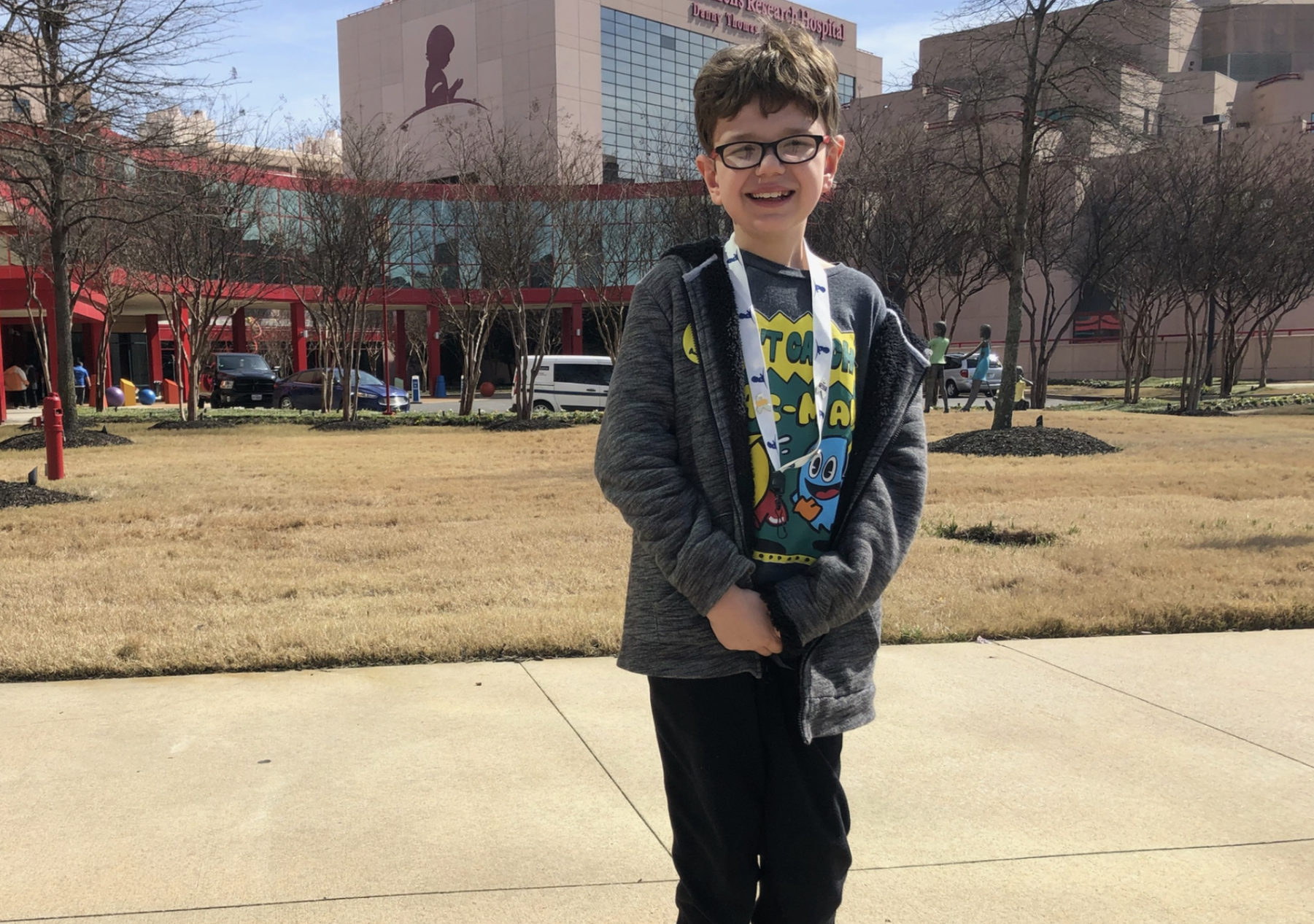
Not every family with a sick kid get to celebrate this milestone. We have friends who are burying their child this week after a years-long battle with a catastrophic disease. The contrast is blinding, and the survivor’s guilt is heavy. Being around so many of our friends this week to honor this family has been hard, but so many of our conversations have been full of thankfulness for Josiah’s wellbeing. It’s humbling that so many people care so much, even ten years into this battle.

I don’t know what the future holds. I don’t know why kids get sick, or what we’re supposed to do when they die, but I have come to believe that all things can be used for good, and for the benefit of those still here. I see that in the lives of every sick kid I have ever met, regardless of how their story ends.

It would be a lie for me to say that I am thankful for the last ten years, but I am stronger for living through them, and hopefully, a better person, husband and father.

Connected #242: An Incredible Critique of Modern Capitalism ⇢

It is a busy week on Connected:

Warren Buffett and Tim Cook star in a new iPhone game, Stephen and Myke tried the official Twitter app for a week and Federico is exporting his notes. Elsewhere, Mark Gurman has reported on iOS 13 and new versions of macOS and watchOS.

My thanks to our sponsors:

  • Freshbooks: Online invoicing made easy.
  • Moo: Custom business printing and design. Use promo code PRINT15 for 15% off.
  • eero: Never think about WiFi again. Get $100 off the ‘Eero base unit and 2 beacons package’, and a year of eero Plus.

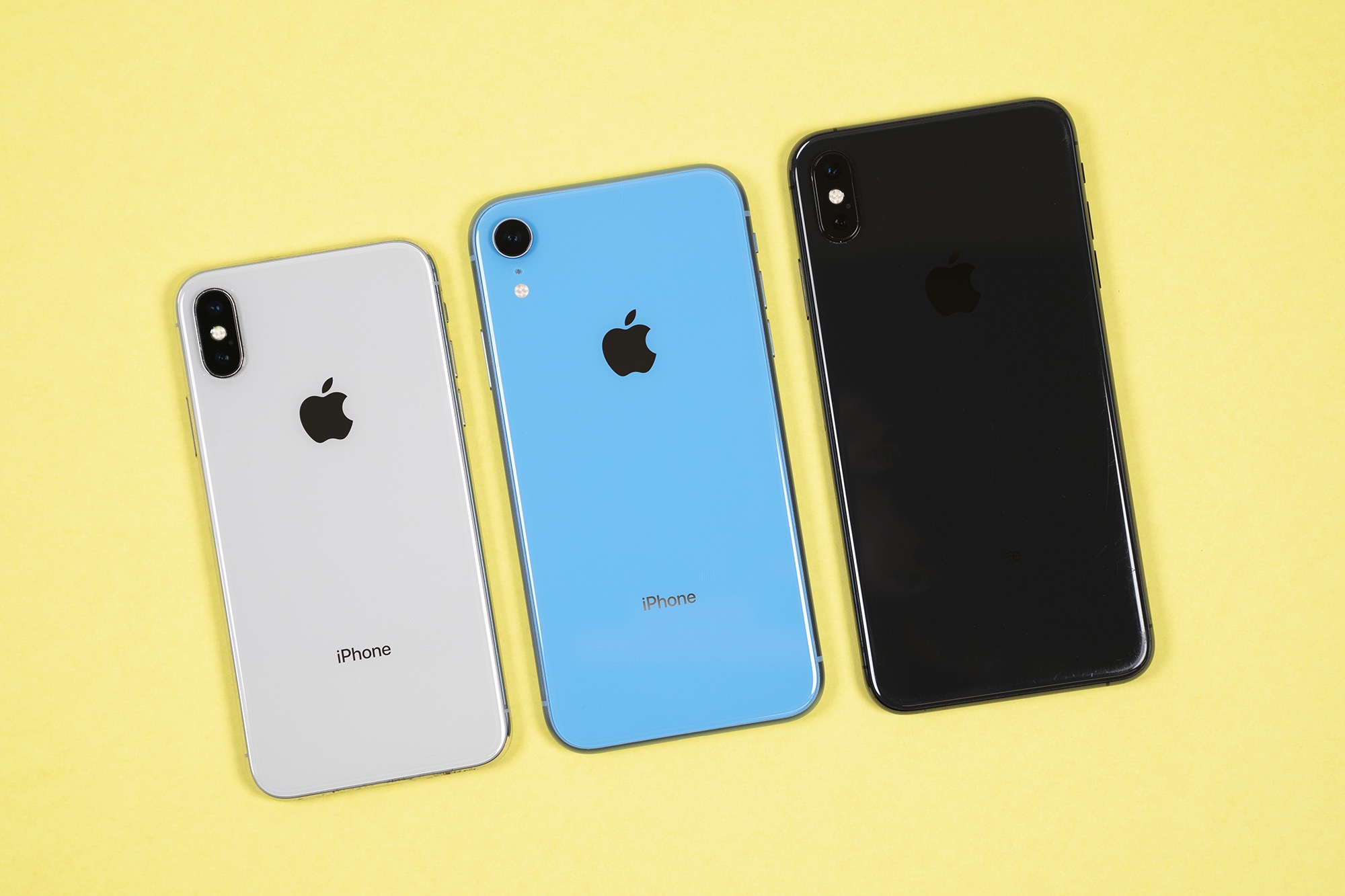
Considering the Next iPhone XR

This year’s colorful, cheaper-but-still-more-expensive-than-any-other-entry-level-model iPhone XR is a fascinating phone. It delivers iPhone XS performance in a nice enclosure, with just enough corners rounded cut to be more in line with previous iPhone prices.

I spent a couple of weeks with a blue model in January, and fell in love with it. The LCD is great, battery life is incredible and the colors are a lot of fun. At the end of the day, I found myself missing the second camera on the back of the XS, however:

The changes to the rear camera is probably the biggest deal for me, personally. While I have just a handful of Portrait Mode photos in my iCloud Photo Library, having that zoom lens has come in handy many, many times since I bought my 7 Plus. Sometimes it is just nice to punch in when taking a photo or video, despite the zoom lens’ optics being not quite as nice as the wide angle shooter. The XR’s single shooter is fantastic, but when using the XR, I have missed the versatility of the second lens.

Ever since that XR left my hands,1 I’ve been thinking about it, and wondering how Apple could improve the XR for 2019.2

Cameras

As I wrote, the lack of a second camera on the back of the XR kept me from switching to it, but with rumors of a three-camera setup coming to the iPhone XS’ successor, there are also reports of the next XR picking up a second camera.

I think this will make the new XR a lot more enticing, especially for customers currently using a 7 Plus or 8 Plus. Heck, as an iPhone XS user, this would be tempting.

Apple also has room to improve its selfie camera game. Other manufactures are shipping higher quality front cameras, and some have moved to wider angles, making group shots easier. Apple has tried to brand the XR as fun and youthful, and these features would play nicely with that messaging.

Technology

With the XR, Apple showed that it had learned its lesson from the 5C days — that people don’t want an old phone stuffed in a shiny new case. As such, the XR goes toe-to-toe with the XS and XS Max in terms of performance, and even beyond in terms of battery life.

I want that to continue to be the case in 2019 and beyond, and I think it will.

In one critical area the XR is behind the flagships: the screen. Don’t get me wrong, the LCD on the XR is great, but OLED screens are just better. If the new XR retained its LCD, I think some people would be upset, but the bigger difference is in terms of resolution. The 326 ppi Retina display is good enough, but the 458 ppi screens on the XS phones are a lot nicer, and it’s a feature some just aren’t willing to skip to save a buck.

Cost

Starting at $749, the XR is more expensive than the old iPhone 8, and is the same price as the Galaxy S10e and $350 more than the newly-announced Pixel 3a, which is so cheap thanks to a plastic body and an older CPU inside. When you widen your search to other Android phones from the likes of OnePlus, Motorola and others, the list of good mid-tier phones get a lot longer.

I assume that Apple is going to keep its next flagship at the $1,000 price point, but I can’t help but wonder if the XR would do better at a $699 price point. It’s a tricky thing, I’m sure, to work this out if you’re Apple. You don’t want to leave money on the table, and if the “cheap” phone is too cheap, people may assume it’s junk, which the XR most definitely is not.

Armchair Phone Development is Easy

I fully understand that my desires for a higher resolution screen and a second camera in the next iPhone XR probably aren’t compatible with my desire to see the cost come down, but that’s why blogging is an easier job than creating new iPhones.

However it shakes out, I think the XR is here to stay as long as the mainstream iPhone is $1,000. As long as that’s the case, Apple should make every iPhone in their line as great as it possibly can.


  1. I closed that review realizing the XS Max was too big for me, and as I suggested then, I have moved to the iPhone XS, having sold my Max to a family member. ↩︎

  2. This is all assuming that Apple keeps running with its current three phone strategy, of course. ↩︎